AC Repair
Local Experts Serving Broward & Miami-Dade
When the South Florida heat hits, a working air conditioner isn't a luxury — it's essential. Martin's Family Cooling provides fast, honest AC repair across Broward and Miami-Dade, from Hollywood and Fort Lauderdale to Miami and Homestead, for homes and businesses alike.
This page explains common AC problems, the signs that you need repair, our diagnostic and repair process, and how to decide between repair and replacement. You can also explore our emergency AC repair service for urgent failures, or our AC maintenance plan to prevent breakdowns before they happen.
Common AC Problems in South Florida
South Florida's heat, humidity, and long cooling season place heavy demands on air conditioning equipment, and certain problems show up frequently. Understanding the most common issues helps you recognize when something's wrong and describe it accurately when you call — which speeds up diagnosis and repair.
Many AC problems trace back to a few root causes: restricted airflow, refrigerant issues, electrical component failure, or drainage problems. In our humid climate, the condensate drain system works overtime removing moisture from the air, and clogs are one of the most frequent service calls we see. Read more about one common symptom in our article on why your AC freezes up in South Florida humidity.
- Low refrigerant from a leak, reducing cooling capacity and efficiency.
- Clogged condensate drain lines causing water leaks and overflow.
- Failed capacitors or contactors preventing the system from starting or running properly.
- Dirty evaporator or condenser coils restricting heat transfer and airflow.
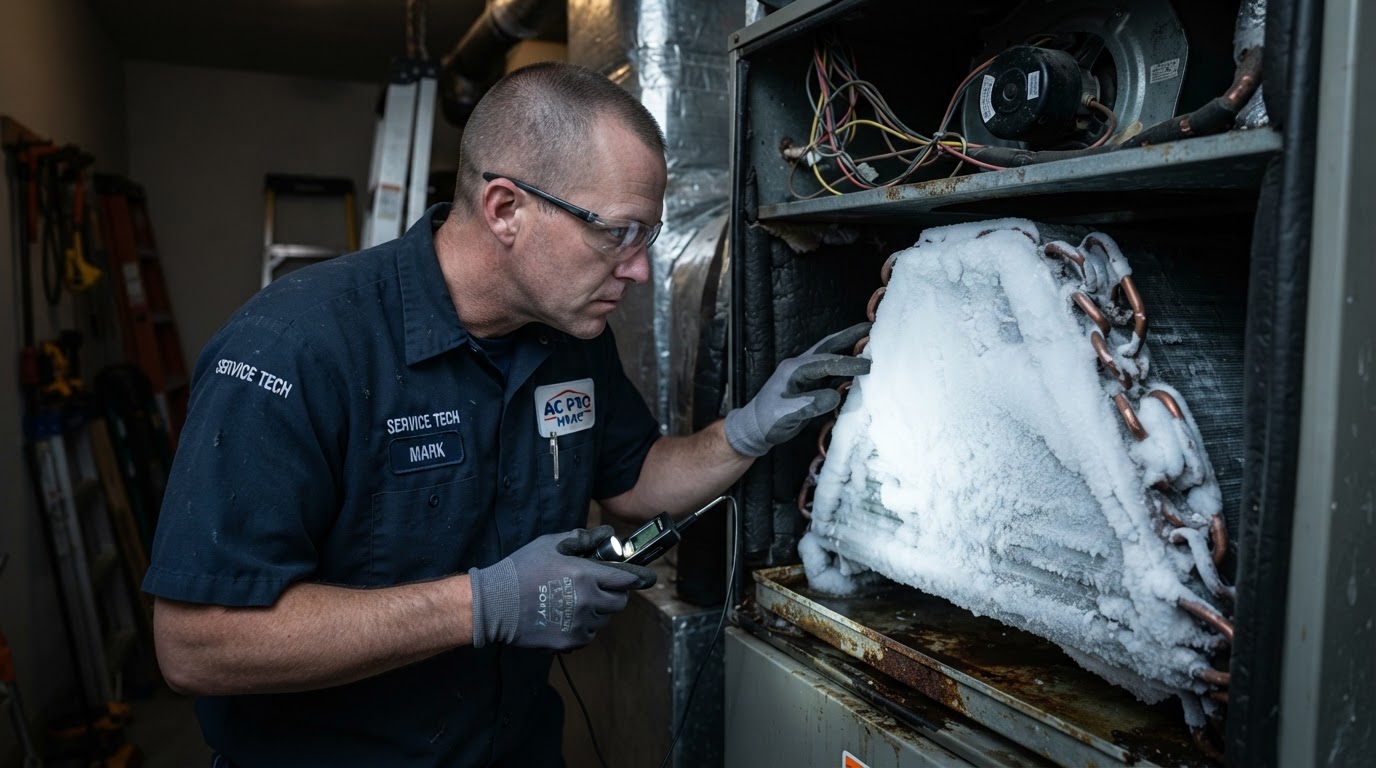
- Frozen indoor coils, often from restricted airflow or low refrigerant.
- Faulty thermostats or control boards causing short cycling or no operation.
- Worn blower motors reducing airflow across the indoor coil.
Signs You Need AC Repair
AC problems rarely appear without warning. Recognizing the early signs helps you arrange service before a minor issue becomes a major breakdown — and before South Florida's heat makes your home uncomfortable. If you notice any of the following, it's a good reason to schedule a diagnostic visit.
- AC running but not cooling the home to the set temperature.
- Warm or weak airflow from the vents.
- Strange noises — grinding, squealing, humming, or rattling — from the indoor or outdoor unit.
- AC leaking water or ice forming on the refrigerant lines.
- Unusual spikes in your electric bill without a change in usage.
- The system short-cycles, turning on and off frequently.
- Bad odors or musty smells from the vents.
- The system won't turn on at all.
Our AC Repair Services
We diagnose and repair the full range of AC problems, for all major brands and system types. Each repair begins with a thorough diagnosis to identify the real cause — not just the symptom — and every job is quoted upfront before any work begins.
- Diagnostic & Troubleshooting — a full system inspection to pinpoint the exact issue fast.
- Component Repair — capacitors, contactors, fans, compressors, blower motors, and more.
- Refrigerant Service — leak detection, repair, and proper refrigerant charging.
- Coil Cleaning — restore airflow and efficiency by cleaning dirty evaporator or condenser coils.
- Drainage Service — clear clogged condensate drains and stop water leaks.
- Emergency Repair — 24/7 response when your AC quits at the worst time.
The Diagnostic Process
An accurate diagnosis is the foundation of an honest repair. Our technicians inspect both the indoor and outdoor equipment, check refrigerant levels and pressures, test electrical components, evaluate airflow, and assess the condensate system. Rather than guessing at a symptom, we identify the root cause so the repair actually solves the problem — and so we can advise honestly on whether repair or replacement makes more sense.
A diagnostic visit is $100, and that fee is applied toward any repair you approve. You'll receive a clear, upfront quote before any work begins, with no hidden fees and no pressure.
Repair vs. Replacement: Making the Right Call
When a repair is expensive, it's natural to wonder whether replacement makes more sense. A useful guideline is the 50% rule: if the repair cost is more than half the price of a new system, or your unit is over 10–12 years old, replacement often makes better economic sense. But every situation is different, and we help you weigh the factors honestly — the age and condition of your system, the cost of the repair, energy efficiency, and your long-term comfort goals.
We never push replacement when a straightforward repair will serve you well, and we never recommend a cheap repair that's likely to fail again soon. Our goal is the recommendation that's genuinely best for your home and budget. See our AC installation and replacement page for full system options, and our article on AC repair vs. replacement and the 50% rule.
Benefits of Prompt AC Repair
Addressing AC problems promptly pays off in comfort, cost, and equipment life. A small issue left unrepaired often becomes a larger, more expensive one — and in South Florida's heat, a breakdown can quickly make a home uncomfortable or even unsafe. Prompt repair restores comfort, protects your equipment, and often saves money compared to emergency service later.
- Restored comfort, often the same day.
- Lower energy bills from efficient, properly functioning equipment.
- Extended equipment lifespan by preventing secondary damage.
- Prevention of small issues becoming major breakdowns.
- Upfront, honest pricing with no surprises.
Brands We Service
We service all major air conditioning brands — Carrier, Trane, Lennox, Rheem, Goodman, Daikin, Mitsubishi, Bryant, American Standard, York, Amana, Ruud, Fujitsu, and LG. Our technicians are experienced across the full range of equipment, so whatever brand you have, we can diagnose and repair it. We stock common parts to maximize the chance of a same-visit fix.
How the Repair Process Works
Requesting AC repair is straightforward. Book online or call, and we'll schedule a diagnostic visit — often the same day for cooling failures. Here's what to expect from start to finish.
- Book or call — request service and describe the symptom.
- Diagnosis — a technician inspects the system and identifies the cause.
- Upfront quote — we explain the problem and the price before any work begins.
- Repair & verification — we complete the work and confirm proper cooling before leaving.
Preventing Future Breakdowns
The best repair is the one you never need, and regular maintenance is the most effective way to prevent breakdowns. In South Florida's demanding climate, twice-yearly maintenance catches worn parts, low refrigerant, and clogged drains before they cause a failure. Our Family Comfort Plan includes two seasonal tune-ups, priority scheduling, and repair discounts — the smartest way to keep your system reliable. Learn more on our AC maintenance page.
Why Martin's Family Cooling
Our family-owned team diagnoses AC problems accurately and repairs them honestly. We're licensed and insured, our technicians are background-checked, and we service all major brands. We quote upfront, recommend only what's needed, and help you make informed decisions about repair and replacement. When you call Martin's Family Cooling, you're working with a local team that stands behind its work.
- Family-owned and locally accountable.
- Licensed, insured, and background-checked technicians.
- All major brands serviced, with common parts stocked.
- Upfront pricing and honest repair-vs-replacement guidance.
- Same-day service and 24/7 emergency response.
Troubleshooting Before You Call
A few quick checks can save a service call or help you describe the problem more accurately when you do. Before calling, check that your thermostat is set to cool and below the current room temperature, and that it has fresh batteries if it's not hardwired. Inspect your air filter — a clogged filter is one of the most common causes of weak airflow and frozen coils, and replacing it may restore performance immediately. Confirm the breaker for the outdoor unit hasn't tripped, and that the outdoor condenser isn't blocked by plants, debris, or a covered vent.
If you see ice on the refrigerant lines, turn the system off and let it thaw before calling — running a frozen system can damage the compressor. If water is pooling, check whether the condensate drain pan is overflowing, which points to a clog. These checks don't replace a professional diagnosis, but they help you rule out simple causes and give our technician a clearer picture of the issue. Learn more in our AC repair vs. replacement guide.
- Confirm the thermostat is set to cool and below room temperature.
- Check and replace a clogged air filter.
- Verify the breaker for the outdoor unit hasn't tripped.
- Clear debris from around the outdoor condenser.
- Turn off a frozen system and let it thaw before calling.
- Check the condensate drain pan for overflow if water is pooling.
What Influences AC Repair Cost
Several factors shape the cost of an AC repair, and understanding them helps you anticipate what to expect. The diagnostic visit is a flat $100, which is applied toward any repair you approve. From there, the repair cost depends on the failing component, the system's refrigerant type, parts availability, and the scope of labor involved. Common repairs like a capacitor or contactor replacement typically start around $200, while more involved repairs such as a compressor or coil replacement cost significantly more.
Refrigerant type matters too: older systems using R-22 (no longer produced) can be expensive to recharge, which is one reason we'll discuss replacement when R-22 systems need major repair. We always provide an upfront quote after diagnosis, so you know the full cost before any work begins — and we'll help you weigh that cost against the value of repair versus replacement. See our transparent pricing on the book online page.
- The failing component — a capacitor costs far less than a compressor.
- Refrigerant type — R-22 systems are costlier to service than modern R-410A.
- Parts availability — we stock common parts to enable same-visit fixes.
- Labor scope — accessibility and complexity of the repair.
- System age — older systems may need multiple repairs in succession.
Seasonal Considerations in South Florida
AC repair demand in South Florida follows the climate. The peak cooling season runs from roughly April through October, when heat and humidity push systems to their limits and breakdowns are most common. During these months, same-day service is in high demand, and scheduling maintenance before the season starts is the best way to avoid a failure when technicians are busiest. Hurricane season, running June through November, adds another layer: power outages and storms can stress equipment, and a system that's already marginal may fail after a disruption.
Even in the cooler months, South Florida homes rely on cooling, and a system that underperforms in winter humidity still needs attention. Year-round vigilance is the reality of living here, which is why our Family Comfort Plan includes twice-yearly tune-ups timed to the seasons. Read our guide on preparing your HVAC for hurricane season for storm-specific tips.
Avoiding Common AC Mistakes
Some AC problems are preventable, and a few habits go a long way toward keeping your system healthy. The most common mistake is neglecting the air filter — a dirty filter restricts airflow, reduces efficiency, and can freeze the coil or damage the compressor over time. Another is closing vents in unused rooms, which can actually increase duct pressure and cause leaks rather than saving energy. Setting the thermostat very low doesn't cool the home faster; it just runs the system longer and can freeze the coil.
Skipping maintenance is another common misstep. In South Florida's demanding climate, a system that isn't maintained will lose efficiency, develop problems faster, and cost more to operate. Finally, ignoring early warning signs — a strange noise, a higher bill, weak airflow — often turns a small, inexpensive repair into a major breakdown. Addressing issues promptly is always the more economical choice.
- Replace the air filter regularly — every 1–3 months depending on use.
- Don't close vents in unused rooms; it increases duct pressure and causes leaks.
- Avoid setting the thermostat very low; it doesn't cool faster and can freeze the coil.
- Keep the outdoor condenser clear of plants, debris, and enclosures.
- Don't skip maintenance — it's the single best way to prevent costly repairs.
- Address warning signs early rather than waiting for a breakdown.
What to Expect From a Quality Repair
A quality AC repair does more than get the system running again — it addresses the root cause, restores efficiency, and helps prevent recurrence. When our technician completes a repair, you should expect clear communication about what failed and why, an upfront price agreed before work began, and verification that the system is cooling properly before we leave. We also inspect related components that may have been affected, because a failure in one part can stress others.
After a repair, we'll explain any maintenance steps that could prevent a similar issue and whether the system's overall condition suggests future repairs are likely. If a repair points toward deeper problems — an aging compressor, recurring refrigerant leaks, or a system past its service life — we'll discuss replacement honestly so you can plan ahead. Our goal is a repair that lasts and a customer who understands their system. Explore our AC installation options if replacement is on the horizon.
Preparing for Your Service Visit
A little preparation helps your service visit go smoothly. Make sure the technician can access both the indoor air handler (often in a closet, attic, or garage) and the outdoor condenser. Clear any items blocking access, and if you have pets, secure them so the technician can work safely. Note when the problem started and any symptoms you've noticed — sounds, smells, performance changes — as these details speed up diagnosis. Have your system's brand and approximate age available if you know them.
If the system is frozen or leaking, let us know when you book so we can prioritize appropriately. And if you've already checked the filter, thermostat, and breaker, mention that too — it helps us focus the diagnosis. The more we know upfront, the faster we can restore your comfort. You can book a diagnostic through our book online page or call us directly.
- Clear access to the indoor air handler and outdoor condenser.
- Secure pets so the technician can work safely.
- Note when the problem started and any symptoms.
- Have the system's brand and approximate age ready if known.
- Mention any checks you've already done (filter, thermostat, breaker).
Frequently Asked Questions
These are questions customers ask about AC repair. The full FAQ set appears below.