
AC Repair vs. AC Replacement: How to Decide What Makes Sense
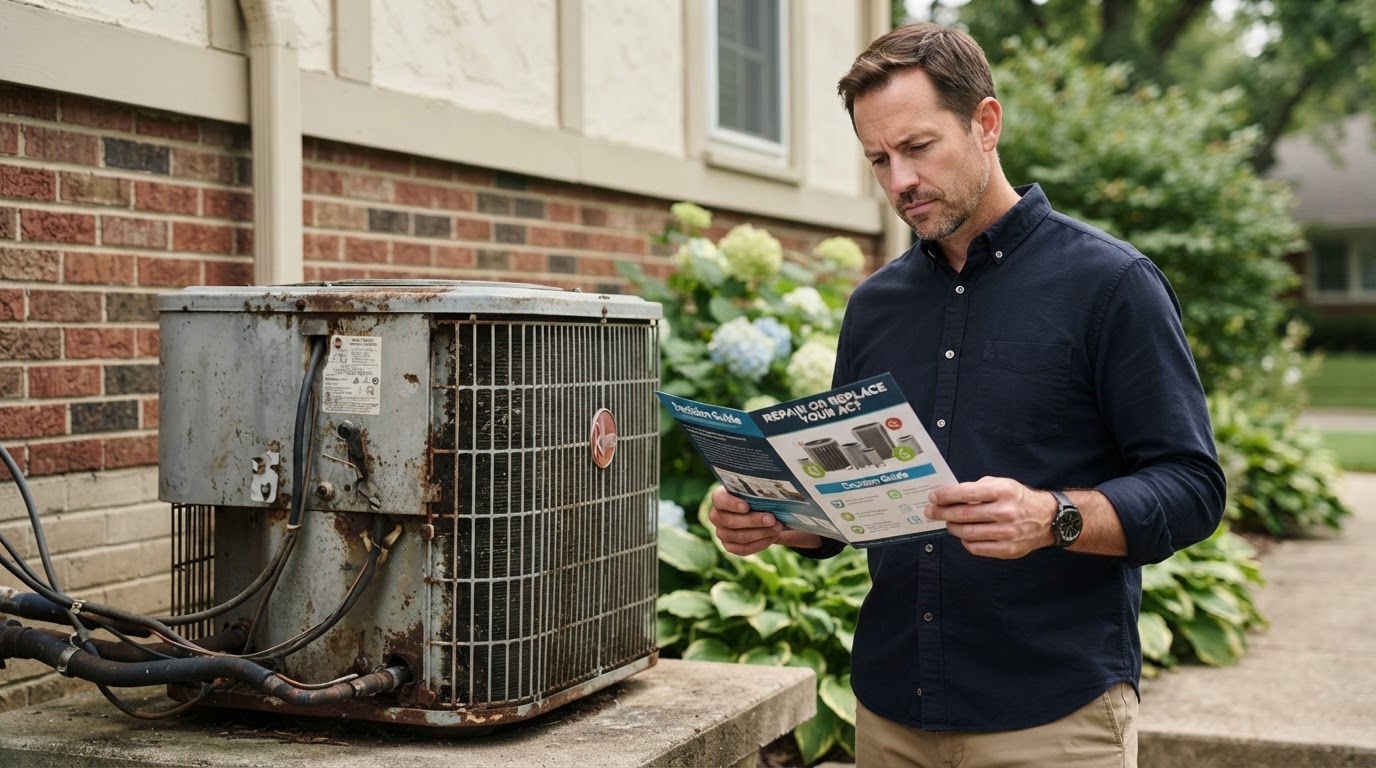
Deciding between AC repair and replacement comes down to system age, repair cost, repair history, comfort, and efficiency. A common guideline — the 50% rule — suggests that when a repair costs more than half the price of a new system, replacement often makes more economic sense, especially on an older unit. But the decision should always follow a thorough diagnosis, not a guess. Martin's Family Cooling helps homeowners and businesses across Broward and Miami-Dade weigh repair against replacement after an on-site evaluation, and this guide explains the factors that should shape your decision.
Start with diagnosis, not a decision
The most important point is that the repair-or-replace decision follows diagnosis, not the other way around. Before you can compare a repair against replacement, you need to know what's actually wrong, what the repair involves, and what condition the rest of the system is in. A technician who recommends replacement without inspecting the system, or who quotes a repair without diagnosing the cause, isn't giving you the information you need.
Diagnosis identifies the fault, evaluates the system's overall condition, and gives you a repair quote you can compare against replacement. From there, the decision becomes a matter of weighing a few clear factors rather than guessing. If you're starting from a symptom, a diagnostic visit is the right first step.
The 50% rule explained
The 50% rule is a straightforward guideline: if the cost of the repair is more than 50% of the cost of a new system, replacement usually makes more economic sense — especially if your unit is over 10–12 years old. The logic is simple. A major repair on an aging system often just delays the inevitable, and the money spent on the repair could have gone toward new equipment with a full expected service life ahead of it.
The rule isn't absolute. A repair that's just under 50% on a 14-year-old system may still be a poor investment if other major parts are showing wear. And a repair that's over 50% on a relatively young system might be worth it if the rest of the equipment is in good shape. The 50% rule is a starting point, not a verdict — it works best alongside the other factors below.
System age and expected life
Age is one of the strongest predictors of whether repair or replacement makes sense. Most central air conditioners have an expected service life of roughly 10–15 years, and in South Florida's demanding climate, systems often work hard for most of the year. A system over 10–15 years is nearing the end of its useful life, and major repairs at that stage are less likely to pay off.
Age also affects parts and refrigerant availability. Older systems that use R-22 refrigerant are expensive to recharge and being phased out, and parts for aging units can be harder to source, which drives up repair cost and timeline. If your system is in this range and facing a major repair, replacement is worth a serious look.
Repair history and frequency
How often you've needed service tells a story. A single repair on an otherwise reliable system is one thing; a system that needs a call every season is signaling that its components are wearing out together. If you're calling for service repeatedly — a capacitor this year, a contactor last year, a drain clog the year before — the pattern suggests the system is reaching the stage where repair becomes a recurring cost rather than a one-time fix.
Track your repair history. When a new repair estimate comes in, look at what you've spent over the past few years. If the cumulative cost is approaching the price of a new system, replacement starts to look more rational, even if no single repair crosses the 50% threshold.
Comfort and efficiency signals
Comfort problems can point toward replacement even when the system is technically running. Hot spots, uneven cooling, and persistent humidity suggest a system that's undersized, failing, or no longer matched to your home's needs. These issues often can't be fully resolved by a repair, and they affect daily comfort.
Efficiency is the other signal. Rising electric bills without a change in usage can mean the system is losing efficiency — working harder to deliver less cooling. Newer systems can offer better efficiency, but no contractor should promise a specific utility-bill reduction, because actual savings depend on usage, insulation, ductwork, and sizing. Still, if your bills are climbing and your system is older, replacement is worth evaluating for the efficiency alone.
Factors to weigh together
No single factor should decide the repair-or-replace question on its own. Here's how to think about them as a group.
- Age: Over 10–15 years favors replacement, especially for major repairs.
- Repair cost vs. system value: The 50% rule is a useful starting point.
- Repair history: Frequent calls suggest the system is wearing out as a whole.
- Comfort: Hot spots and uneven cooling may not be fixable by a repair.
- Efficiency: Rising bills signal declining performance.
- Refrigerant: R-22 systems are costly to service and being phased out.
- Parts availability: Hard-to-source parts increase repair cost and delay.
What replacement involves
If replacement makes sense, the process starts with proper sizing. A system that's too large or too small won't perform well, so a contractor should evaluate your home's cooling load — considering size, insulation, windows, and ductwork — before recommending equipment. Installation includes matching the indoor and outdoor components, verifying ductwork compatibility, and commissioning the system to confirm it operates correctly.
Replacement is a larger investment than a repair, but it comes with a full expected service life, current refrigerant, available parts, and the efficiency of new equipment. Financing may be available to make the investment more manageable — ask what options exist when you get your quote. Our guide to AC installation in South Florida covers what's involved.
An honest approach to the decision
The right contractor doesn't push you toward an unnecessary replacement, nor do they recommend a repair that won't last. After a thorough diagnosis, Martin's Family Cooling lays out the repair cost, the system's condition, and the replacement option — so you can decide with confidence. The goal is to give you the facts, not to steer you toward a particular outcome.
If the repair is minor and the system is sound, a repair is the right call. If the repair is major and the system is aging, replacement may be the better long-term value. And if the system is working but overdue for service, a maintenance visit may be all that's needed to keep it running well.
Frequently asked questions
When should I replace my AC instead of repairing it? Replacement is worth evaluating when a repair costs more than half the price of a new system, when the system is over 10–15 years old, when repairs are frequent, or when comfort and efficiency have declined. The decision should follow a diagnosis.
What is the 50% rule? If a repair costs more than 50% of the cost of a new system, replacement usually makes more economic sense, especially on an older unit. It's a guideline, not a rule — consider it alongside age, repair history, and comfort.
How long should an AC last in South Florida? Most central systems last roughly 10–15 years, and South Florida's year-round cooling demand can push equipment hard. Age is a key factor in the repair-or-replace decision.
Will a new AC lower my bills? Newer systems can be more efficient, but no one can guarantee a specific savings amount — it depends on usage, insulation, ductwork, and sizing. If your bills are rising on an older system, replacement is worth evaluating.
Can I just keep repairing my old AC? You can, but at some point the cumulative repair cost and the risk of a major failure make replacement the better value. Track your repair history and compare it against the cost of a new system.
The Martin Family Team
Martin's Family Cooling — licensed & insured HVACR contractor serving Broward & Miami-Dade.